There is a particular satisfaction in hearing the “pop” of a canning jar sealing.
For generations of Appalachian families, that sound has meant food put away for another day — green beans, tomatoes, chow-chow, pumpkin butter and countless other foods preserved when they were plentiful and enjoyed long after the harvest ended.
But those jars have preserved more than food.
They have helped preserve knowledge, traditions and connections among families and communities — a story explored in the newest installment of East Tennessee State University’s "Appalachian Foodways” exhibit series.
“Canning and Preserving,” curated by Sandy Laws through ETSU’s Archives of Appalachia, draws on historic and contemporary films, oral histories, photographs, recordings and other materials to explore the long-standing tradition of food preservation in the region. It is the third installment in the Archives’ “Appalachian Foodways” series.
From leather britches to canning jars
Long before modern refrigeration and freezers, Appalachian families relied on a variety of methods to make food last.
Among them was drying.
The exhibit includes an oral history recorded in the late 1950s or early 1960s with Clara Crisp, who described drying “leather britches” beans in the sun and recalled her grandmother stringing beans and hanging them around the porch or fireplace. Pumpkins, fruits, peppers and other foods could likewise be dried and stored for later use.
As canning jars became widely available, canning grew into an important means of preserving the harvest. Methods have continued to evolve, with pressure canning, freezing and modern dehydrators joining older techniques.
The exhibit traces that evolution through examples that include tomatoes, green beans, chow-chow and pumpkin butter, showing not only how foods were preserved but how knowledge of those processes moved from one generation to the next.
Preserving food together
Community is at the center of that story.
The exhibit includes archival material from the Telford Cannery, a community facility where residents could bring food to be canned, with preference given to low-income families.
It also reaches beyond the Archives’ existing collections to document traditions that remain alive today.
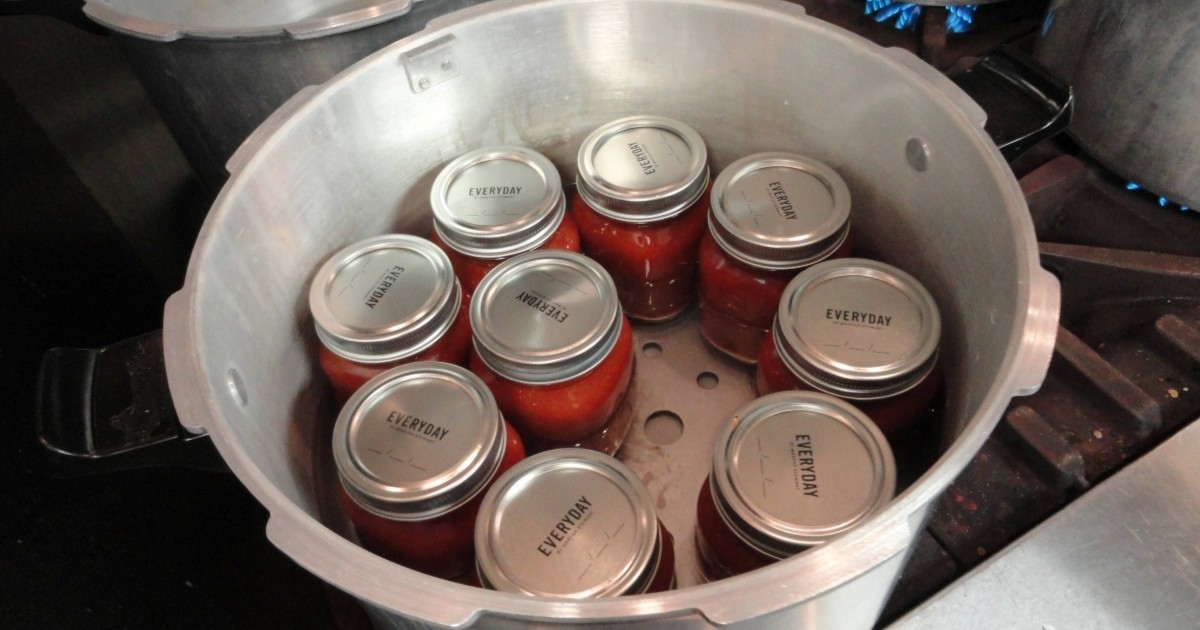
For this installment, Laws visited Hiltons Memorial United Methodist Church in Scott County, Virginia, where church members continue an annual tradition of canning tomato soup and green beans.
The tomato soup recipe is kept in what members call their “cooking bible” — a black three-ring binder filled with protected, typewritten recipes that are updated as methods change. The soup is prepared for the church’s annual Lord’s Acre Sale, but the tradition also serves another purpose: passing the knowledge of home canning to future generations.
Watching the volunteers work, Laws said, reveals how much of the tradition is rooted in cooperation. Everyone has a job as ingredients are prepared, soup is cooked, jars are filled and pressure cookers are monitored. Conversation and laughter accompany the work. One documented session produced 63 pint jars of tomato soup.
“These materials highlight not only the importance of food preservation, but the community that has held these traditions together,” Laws said. “Foodways connect us to our heritage and to a place, but they also connect us to one another. When people gather to preserve food, they are also sharing knowledge and traditions that can continue with the next generation.”
A tradition captured in the Archives
The exhibit pairs newly created footage from Hiltons with materials preserved in the Archives of Appalachia, including a 1970s pumpkin butter-making demonstration from the Broadside Television Collection.
For Laws, the project also has roots at ETSU. Her interest in foodways began after taking the "Appalachian Foodways” course created in 2005 by Fred Sauceman, the longtime ETSU educator, author and chronicler of Southern Appalachian food traditions.
That experience eventually helped inspire a series that preserves both historical materials and traditions that are still practiced today.
Experience the exhibit
The public can explore "Appalachian Foodways: Canning and Preserving” online through ETSU’s Archives of Appalachia at https://bit.ly/4dl0UCE.
%20(1).avif)