
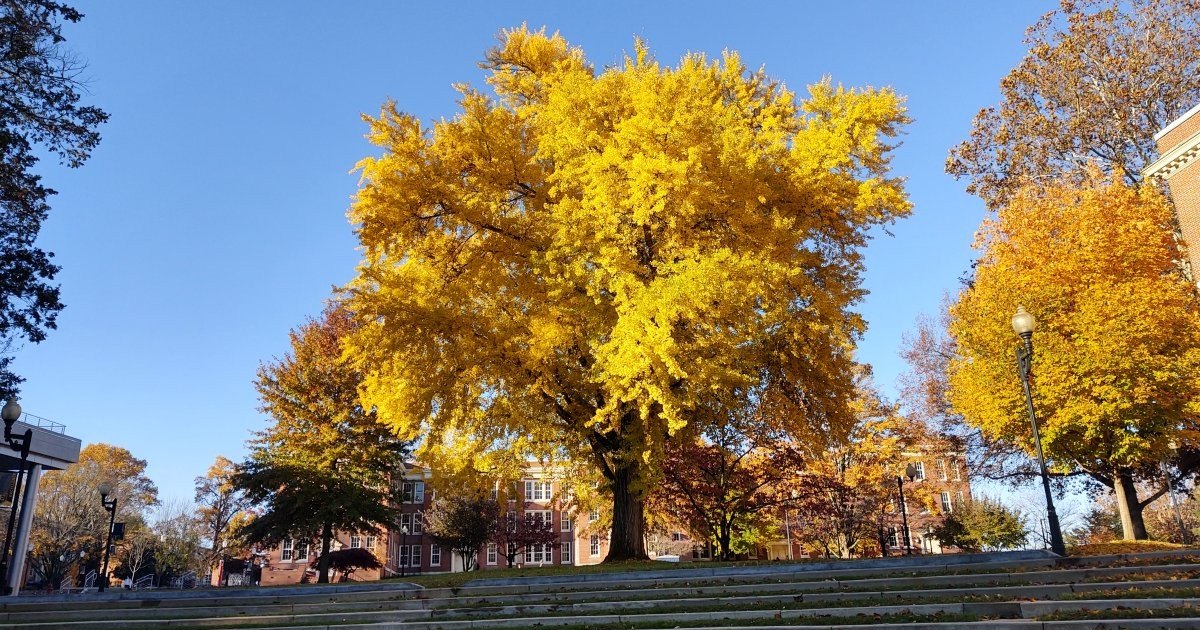
After weeks of unusually warm September weather, the Southern Appalachians are finally getting something fall color needs: cooler nights.
Recent rainfall is helping, too.
Rainfall over the weekend and during the week brought some relief after a stretch of hot, dry weather, according to East Tennessee State University experts monitoring the region’s fall color season.
“The rain over the weekend and this week was more widespread than the last rain event and should have helped replenish some groundwater and keep some leaves on the trees,” said Travis Watson, ETSU’s campus arborist. “Hopefully, we will see more rain and a return to seasonable temperatures.”
Dr. Andrew Joyner, Tennessee’s state climatologist and an ETSU professor, said the impact of weekend rainfall varied significantly by location, but rainfall on Tuesday and Wednesday was more widespread and beneficial.
That moisture, he said, may help slow some of the cumulative effects of the recent heat and drought.
And temperatures are beginning to cooperate.
Joyner said the region has moved from temperatures running more than 10 degrees above average to conditions closer to normal for the next several days. Although temperatures may rise somewhat again next week, they are not expected to reach the same levels experienced recently.
More importantly for fall color, cooler nights are returning.
“We are finally going to see more consistently cooler nighttime temps — 50s and even 40s,” Joyner said.
Weather models are also showing signs of a stronger cold front arriving around Oct. 5.
Is fall color running late?
The prolonged warmth appears to have slowed color development somewhat.
Watson said much of the region could be running roughly a week behind schedule, although several competing factors make the season difficult to predict.
A warmer-than-average spring can contribute to slightly earlier color, while the extreme heat and dry conditions of August and September can push development in the opposite direction.
“It’s really difficult to say what we will see,” Watson said.
September has been particularly unusual. Joyner said temperatures so far this month have been approximately six to eight degrees above normal across East Tennessee.
For comparison, 2019 saw a mostly drought-free summer followed by a rapid onset of drought conditions in the fall, which contributed to duller colors and earlier leaf drop.
Joyner cautioned that the full effects of this year’s conditions remain to be seen, but he is hopeful the current move toward wetter, cooler weather will help.
Fall color — or drought stress?
Some trees are already changing, but not all early color is necessarily seasonal.
Watson said drought-stressed trees often react differently from trees undergoing their normal autumn transition.
During normal fall color change, trees gradually stop producing chlorophyll as daylight decreases. That allows yellow and orange pigments to become visible, while some leaves later develop red coloration before eventually drying and falling.
Drought stress can be much more abrupt.
Stressed trees may close pores in their leaves to conserve water, then shed those leaves prematurely. Instead of a gradual color progression, leaves may simply brown, dry and fall. One clue is the pattern.
“In a large forest, individual trees that stand out from the rest of the woods may indicate stress,” Watson said.
Normal seasonal change, by contrast, tends to appear more uniformly, beginning at higher elevations and progressing down the mountains as species change color.
Although Watson has seen individual trees showing substantial stress and defoliation, he said intact forest systems appear to be holding up reasonably well.
“Overall, I think the more intact forests are still weathering the conditions fairly, and we will still see some good color,” he said.
Tree of the week: Ginkgo
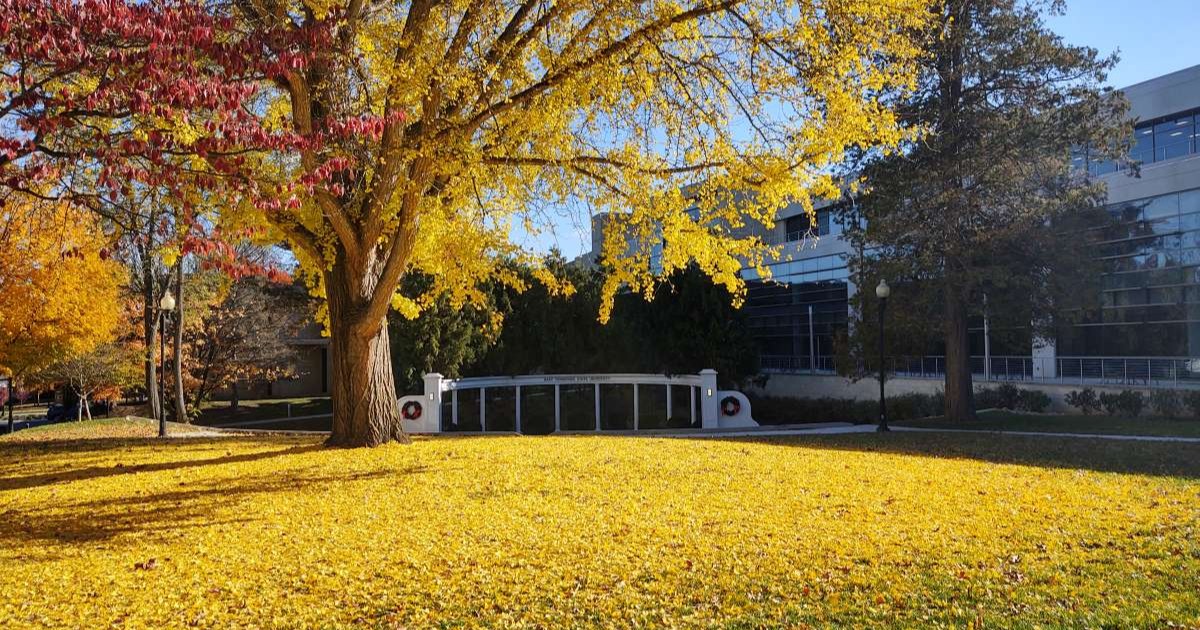
This week’s featured tree is Ginkgo biloba, one of Watson’s favorite species.
Often described as a “living fossil,” ginkgo has ancient origins in the fossil record and is the only surviving representative of its larger plant group.
Despite its broad, fan-shaped leaves and deciduous habit, ginkgo is more closely related to conifers such as pines than to familiar hardwoods like oaks and maples.
Its fall display is unmistakable.
Ginkgo leaves turn a brilliant yellow or gold and often fall within a remarkably short period, sometimes creating a dense yellow carpet beneath the tree almost overnight.
Some ginkgoes on campus have already changed because of weather stress, Watson said, but one of the best specimens to watch is near the ETSU Amphitheater (pictured above).
As nighttime temperatures return closer to seasonal norms, its transformation should not be far behind. And even with the uncertainty surrounding this year’s weather, Watson said fall-color watchers shouldn’t wait too long to start planning.
“It’s definitely time to start making those road trip plans,” he said.
ETSU's weekly Fall Color Reports combine scientific expertise with regional knowledge to help residents and visitors make the most of one of Appalachia's most spectacular seasons. As the Flagship of Appalachia, ETSU is uniquely positioned to share both the science and beauty behind the region's renowned autumn landscapes.
The next report will be published next Friday at news.etsu.edu.
.jpg)