

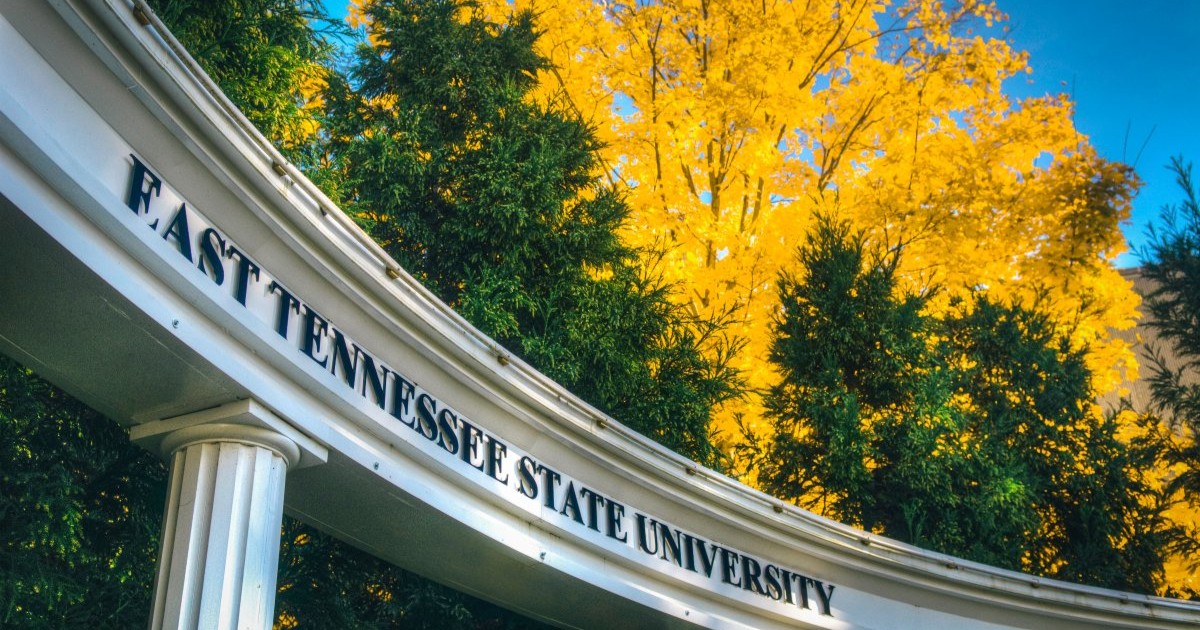
Fall color is on the move across the Southern Appalachians.
The highest peaks have largely passed peak, but elevations just below them are entering some of their best color of the season, according to East Tennessee State University experts.
“Elevations above 4,000 feet have pretty much passed peak at this point,” said Travis Watson, ETSU campus arborist. “The 3,000- to 4,000-foot elevations are approaching peak color.”
That means high-elevation towns and mountain roads remain strong viewing options this weekend and into next week.
Watson recommends scenic drives along the Blue Ridge Parkway, highways 321 and 421, the old Asheville Highway, Mount Rogers and Grayson Highlands in Virginia, and Unaka Mountain.
“We have so many windy mountain roads,” he said. “Pick your favorite, grab a lunch and make a day of it.”
Storm leaves most color intact
The region did receive some strong winds from Hurricane Isaias, but the storm appears to have caused less leaf loss than initially feared.
Dr. Andrew Joyner, Tennessee’s state climatologist and an ETSU professor, said some downed trees were reported at higher elevations, particularly on the North Carolina side of the mountains, but most foliage held.
“I think if this tropical system had come through a week or two later, then we would have had more leaf loss,” Joyner said. “A lot of leaves were still green or just showing light color, so they didn’t blow off as easily.”
Watson saw a similar pattern, noting that poplars and other species that tend to drop leaves earlier appeared to take the brunt of the leaf loss.
“The winds from Isaias certainly brought a lot of leaves off the trees,” he said. “Some areas undoubtedly saw more of this than others, but it looks like the majority of the forest is still pretty unaffected.”
Tri-Cities color is coming
The majority of the Tri-Cities sits at elevations of roughly 1,000 to 3,000 feet, giving the area another week or two before peak color becomes widespread.
Still, signs are already becoming much easier to spot.
“I am seeing a lot of wonderful color in neighborhoods and urban spaces now,” Watson said.
On ETSU’s campus, Watson keeps a close eye on the Burning Bush (Euonymus alatus) near Sherrod Library as one indicator that color is moving into the valley. Those shrubs are already well on their way to brilliant red.
He is also watching the ash trees around the ETSU Foundation Carillon and Seehorn Road, which have held their leaves better than in some previous years and are beginning to color nicely.
At this point in the season, Watson said the progression of color is largely set. Weather can still affect how long the display lasts, particularly during high winds or severe drought, but it is less likely to alter the overall course of the season dramatically.
A few cold mornings ahead
Joyner said colder weather remains in the forecast, though the pattern will continue to see-saw between cooler and warmer periods.
Some higher-elevation areas could approach or fall below freezing around this weekend, with another potential cold period around Oct. 26.
For most of the region, temperatures should dip into the 30s before warming again. Light rainfall may accompany the next couple of cold fronts, but Joyner said current projections do not suggest substantial totals.
Tree of the week: Sourwood
This week’s featured tree is sourwood, Oxydendrum arboreum.
The medium-sized native tree is common along forest edges throughout the region and is well known for the nectar it produces, which yields prized sourwood honey.
Its summer flowers hang in clusters, and at higher elevations the leaves can begin to turn brilliant red before the blooms have fully faded. Fall color ranges from bright red to purple-red, with occasional yellow.
Sourwoods can live for 100 to 200 years in good conditions and provide food for pollinators and other wildlife.
The species also has deep ties to Appalachian culture. Early settlers used parts of the tree medicinally, while its sour-tasting leaves have historically been used to make tea.
For those looking for a good place to spot sourwood this week, Watson recommends the stretch of the Blue Ridge Parkway in North Carolina between Asheville and the Cradle of Forestry near Brevard.
ETSU's weekly Fall Color Reports combine scientific expertise with regional knowledge to help residents and visitors make the most of Appalachia's most spectacular seasons. As the Flagship of Appalachia, ETSU is uniquely positioned to share both the science and beauty behind the region's renowned autumn landscapes.
Fall Color Reports are published every Friday at news.etsu.edu.

%20(1).jpg)
.jpg)