


TTAC funding and commercialization support are helping ETSU researchers test, protect and advance promising discoveries.
At East Tennessee State University, promising research is moving closer to practical use with help from scientists, inventors and leaders who recognize that a good idea is only the beginning.
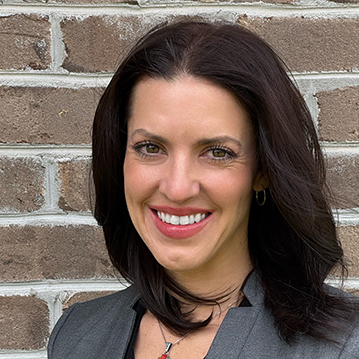
Dr. Katelyn R. Houston is one of them. As director of commercialization, Houston helps ETSU researchers with intellectual property protection, funding and partnerships.
“Innovation that lasts requires more than academic research and market-worthy ideas. It requires people who know how to finish things in hard conditions,” she said.
“My job is to make sure the front door to capturing IP and accessing capital and partnerships is open,” said Houston, a scientist who came from Eastman Chemical, where she spent nearly a decade in product development and corporate innovation.
The Tennessee Technology Advancement Consortium (TTAC) is partly funding Houston’s position, helping the university expand the staff and infrastructure needed to support applied research, invention disclosure and commercialization.
Created by Launch Tennessee, the state’s public-private partnership supporting entrepreneurship and innovation, TTAC provides proof-of-concept funding, one-on-one guidance through programs like its Innovation Fellowship and connections to industry and partner networks across the state.
Dr. Nick Hagemeier, vice provost for research and chief research officer, called Houston the “secret sauce” in ETSU’s commercialization ecosystem and said the university expects intellectual property disclosures to increase from four in 2025 to eight in 2026.

“It’s growth that would not have happened without TTAC,” said Hagemeier, also a professor in the Gatton College of Pharmacy.
ETSU joined TTAC during the consortium’s 2024-25 expansion, adding statewide funding, commercialization expertise and industry connections to resources already in place.
The ETSU Research Corporation serves as the university’s technology transfer and commercialization arm, while the ETSU/Eastman Valleybrook facility provides capacity for applied research, biomanufacturing and scale-up. Houston helps connect those resources, guiding researchers toward the expertise, funding and partnerships their projects need.
The university’s position as a technical hub in a rural region is another advantage, Houston said. “We leverage our placement in rural Appalachia as a strength.”
That regional connection also shapes the work. ETSU researchers take on challenges their own communities face in rural health care, agriculture and connectivity. The projects moving through the system include a surgical tool imagined by a medical resident, a rural computing system for farms and a moss-based platform for producing heart-healthy oil.
The carpentry-to-surgery leap

One of the clearest examples is Dr. Ben Price, an orthopedic surgery resident in ETSU’s Quillen College of Medicine, and, almost by accident, an inventor.
His idea didn’t start in an operating room. He got it watching Facebook Reels about epoxy tables and woodworking. He couldn’t stop thinking about the step drill bit that could create a narrow hole and a wider recess in one pass.
At some point, Price said, it clicked and “crossed over into ortho.”
In fracture care, Price saw how the same basic woodworking principle could simplify a surgical technique and give surgeons greater control.
The step drill component and related technique he subsequently invented are designed to replace a two-drill-bit surgical workflow with a single tool and potentially create stronger compression at the fracture site.
Over roughly a year and a half, the project has progressed from a one-off idea to a provisional patent application, prototype testing and early conversations about a regulatory path.
Then came the closest thing to a trial run, supported by a 2026 TTAC grant. With synthetic bones on the table, Price gathered surgeons, residents and a medical student who took turns with his drill while each attempt was timed. Even ETSU’s lead intellectual property attorney came to observe the surgical exercise.
“Drilling into synthetic bones, stopwatches — that was fun,” Price said. “That was exciting.”
But the bigger shift was “understanding that there are resources out there” for the parts of the process that are less fun, he said. “I couldn’t have done this by myself.”
The timed exercise showed Price’s drill bit could replace two bits and shave seconds from the procedure; whether it can create stronger compression remains to be determined.
TTAC support is also giving Price a chance to present the project at a conference of orthopedic surgeons, putting the invention in front of experts who could evaluate and potentially adopt it.
“I’m going to bring my family along so they can enjoy the beach while I work,” said Price, a husband and father of four small children. “My kids and my wife are my anchor. They keep me sane.”
In Price’s case, the barriers were not scientific so much as practical: time, money, access and knowing which door to knock on next. TTAC simply helped Price keep his invention from disappearing under everything else in his life.
In the fog, close to the farm

Dr. Shehenaz Shaik, an assistant professor in ETSU’s Department of Computing, is investigating a specific kind of bottleneck: what happens when smart technology depends on networks rural users can’t count on.
Her work focuses on fog computing, the layer between distant cloud servers and individual on-site edge servers. For rural farms, that middle layer is important.
Sensors, drones and cameras can collect data all day, but if the network is unreliable, the information may not arrive in time to be useful. A single on-site server has limits, too. Adding more equipment can be expensive, and those separate servers don’t automatically behave like one larger system.
Shaik’s design is intended to address both problems by pooling local computing resources into a scalable system with storage that can grow.
“We want to provide a service similar to the cloud, without depending on the cloud,” Shaik said. “The service stays close to where the sensors are and where users need the information.”
Shaik brought an industry perspective to the project after spending more than a decade as an infrastructure solutions engineer and architect, building systems around users’ needs.
The technology could apply across industries, but Houston encouraged Shaik to begin with smart agriculture, a use case that fits ETSU’s rural Appalachian setting. A 2026 TTAC grant is helping her validate the technology, while Houston connects her with farmers who can help guide its development.
“I want to understand the actual requirements of the farmers so that we are not developing the product based on our assumptions, but on the real problems they’re facing,” Shaik said.
Through TTAC’s Innovation Fellowship, Shaik found a framework for carrying that industry mindset into university research.
“The ideas that become products don’t have to be extremely complex,” Shaik said. “They have to solve a specific problem users are facing.”
Beyond the whole tree

Dr. Aruna Kilaru, a professor in ETSU’s Department of Biological Sciences, wants to know whether producing a valuable plant oil requires growing the whole plant.
Kilaru studies how plants make oil. Her lab identified four avocado genes that can increase how much oil a plant produces and change the type of oil it makes. The discoveries are now moving through patent protection.
“We identified genes that appeared to have unusually strong effects on oil production and composition,” she said.
The question now is what those genes could make possible. With 2025 TTAC funding, Kilaru’s team is testing whether they can be used in moss as part of a cellular-farming platform for producing oleic acid-enriched oil.
The premise is simple, even if the science is not.
“All you need is the oil, right?” Kilaru said. “You don’t need the whole tree.”
Instead of relying on large-scale orchards to produce a specialized oil, the platform would let plant cells make it more directly.
For Kilaru, the link between basic science and application is not new. Before earning her doctorate, she studied biotechnology in India, worked in industry and started her own biotechnology company, converting part of her house into a lab.
“The application aspect has never left me,” she said. “But I feel the applications are more successful if you understand the fundamentals.”
That is where TTAC matters. Kilaru’s basic discovery supplied the tools; TTAC support is helping her test what they might enable.
The work is still early, but it reflects a broader question Kilaru brings to academic research. Publications and discovery matter, she said, but researchers also have to ask what their work gives back.
“What is society getting out of it?” Kilaru said. “What are we giving to people outside the academic world?”
Scaling in Appalachia
Taken together, the three projects show why TTAC’s work at ETSU is larger than any one invention. A surgical tool, a rural computing system and a moss-based oil platform need different kinds of support, but each depends on the same thing: a path that helps university research move beyond the lab without leaving the region behind.
That growing capacity drew national attention in 2025, when the National Security Commission on Emerging Biotechnology visited ETSU’s Valleybrook facility as part of its Biotech Across America Roadshow.
The visit underscores why commercialization capacity matters in places like Northeast Tennessee, said Stuart C. McWhorter, deputy governor and commissioner of the Tennessee Department of Economic and Community Development.
“ETSU sits in a region with real strengths in health care, agriculture, biotechnology and advanced industry,” McWhorter said. “Building capacity there helps connect talent with industry needs, creating more opportunities for regional expertise to contribute to statewide economic growth.”
For university researchers, the next step can often be obvious in hindsight but difficult to see in the moment, whether it’s more data, a patent conversation, a prototype, a customer interview or an introduction to industry.
“Most researchers know the work. What they don’t always know is who to call next, or what kind of proof a partner, patent attorney or customer would need to see,” TTAC Director Charles Layne said. “TTAC gives campuses a way to answer those questions earlier, so promising ideas don’t have to depend as much on chance or personal networks.”
.avif)